
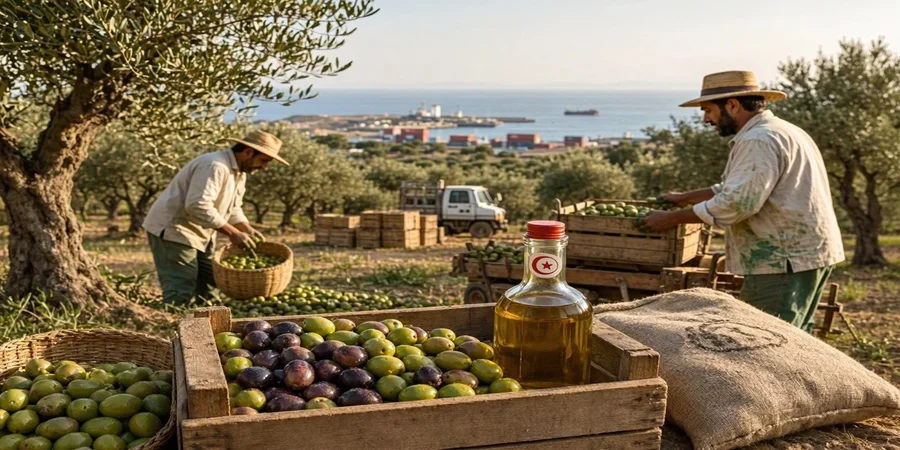
Walk through the Tunisian countryside in autumn and you will understand why olive oil is the country’s best-known export. Olive groves stretch across the center and south, harvests start as the weather cools, and mills run day and night. In recent seasons Tunisia has pushed its way into the top tier of global producers. This guide explains what is behind that success and where the opportunities are for producers, exporters and investors.
A top producer on the world stage
For the 2025/26 season, USDA estimates cited by industry press put Tunisian production at around 470,000 tons, a jump of about 38% on the previous year and enough to move Tunisia into second place worldwide, behind the European Union as a whole. Harvests naturally vary from year to year, but the long-term picture is clear: olive growing is a pillar of Tunisian agriculture and rural life.
Exports keep climbing
The export numbers are just as striking. Tunisian press reported that exports reached 381,200 tonnes over the first ten months of the 2025/26 season, with Tunisian oil reaching more than 82 countries. Europe remains the anchor market, helped by the trade framework between Tunisia and the European Union, and Italy and Spain are major buyers. Producers are also looking further afield, with China, Brazil and Russia regularly named as markets to develop.
The challenge: selling more than bulk
Here is the interesting part for business owners. According to Tunisia’s national agriculture observatory, bulk oil made up about 87.5% of exported volume in the first half of the season, with packaged oil at only 12.5%. Bulk oil is often blended and bottled abroad under other brands, which means a large share of the final value is captured elsewhere.
The good news is that the trend is moving the right way, with packaged exports growing faster than the overall total in early 2026. Every step towards bottled, branded and certified oil is an opportunity.
Where the opportunities are
Bottling and private label. Modern filling lines, quality packaging and food safety certification help Tunisian producers sell finished products rather than raw oil.
Organic and premium extra virgin oil. Tunisian oils have been winning attention at international competitions, and organic production gives access to buyers who pay for traceability and quality.
Branding and export services. Design agencies, lab testing, logistics, export consultants and trade-fair specialists can all help small producers reach foreign buyers.
Equipment and storage. Mills, stainless steel storage, irrigation and harvesting equipment are needed across the value chain.
Beyond oil. Dates, citrus, almonds, harissa and other agri-food products benefit from the same export know-how and Mediterranean reputation.
Tips for buyers and partners
- Ask for lab analysis and harvest dates, not only the label.
- Request samples from several producers before choosing a supplier.
- Remember that prices move with harvest size and global stocks, so agree contract terms carefully.
- Check certifications such as organic or food safety standards when selling to regulated markets.
Connect with Tunisian agribusiness on Afrikta
Looking for an olive oil producer, a bottling partner or an agri-food exporter? Explore Tunisian businesses on Afrikta and contact companies directly.
Do you grow, press, pack or export in Tunisia? List your business on Afrikta and put your products in front of buyers across the continent and beyond.