
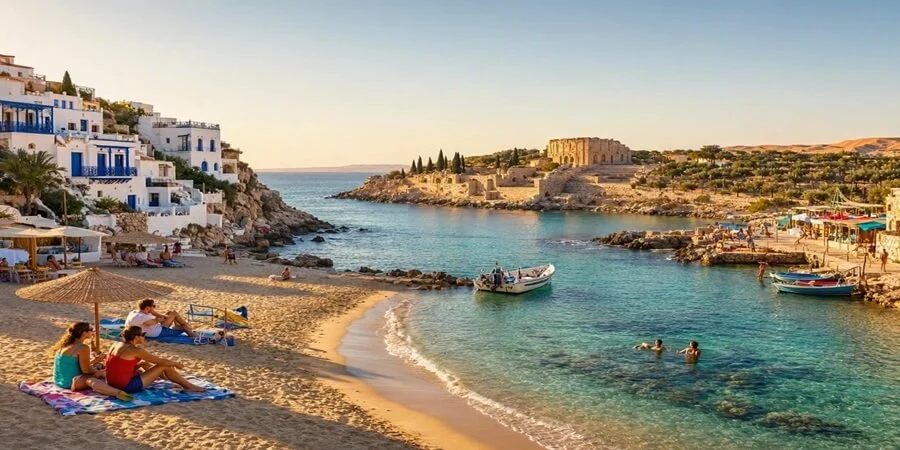
Golden beaches, Roman ruins, whitewashed villages and the edge of the Sahara, all within a few hours of each other. Tunisia packs an unusual amount of variety into a small country, and travelers have noticed. For entrepreneurs, that means a tourism sector with real momentum and plenty of room for new ideas. Here is a clear look at the Mediterranean tourism opportunities in Tunisia.
A sector with strong momentum
Tunisia passed 11 million tourist arrivals for the first time in 2025, and the country has set a target of around 12 million for 2026. Official figures reported by the tourism ministry show that more than 5.8 million international visitors arrived in the first seven months of 2026. Europe supplies many of the visitors, and neighbors Algeria and Libya send millions more, especially during holidays.
What visitors come for
Beaches and resorts. Hammamet, Sousse, Monastir, Mahdia and the island of Djerba are long-standing favorites for sun and sea.
History and culture. Carthage, the Medina of Tunis, the amphitheater of El Jem and the Roman site of Dougga show thousands of years of Phoenician, Roman, Arab and French influence. The blue and white streets of Sidi Bou Said are a photographer’s dream.
Desert and oases. Douz, Tozeur and the south offer dunes, palm groves and star-filled nights that appeal to adventure travelers.
Wellness. Thalassotherapy, using seawater and sea products for treatments, is a Tunisian specialty and a strong draw for visitors looking for rest and recovery.
The real opportunity: more value per visitor
Regional analysts have pointed out that average spending per tourist in Tunisia is still modest compared with some competitors, because the sector leans on mass-market packages. For business owners, this is the opening. Visitors who stay longer, explore beyond the resort and spend on quality experiences create demand that the market has not fully met.
Business ideas worth exploring
- Boutique hotels and guesthouses in medinas, coastal villages and oasis towns, offering character instead of scale.
- Cultural and heritage tours with knowledgeable local guides and small groups.
- Desert and eco-tourism, including camps, hiking, cycling and birdwatching.
- Wellness and thalassotherapy centers that combine treatments with local food and nature.
- Food and craft experiences such as cooking classes, olive oil tastings, pottery and weaving workshops.
- Cruise and day-trip services, from transport to shore excursions, as cruise visits to Tunisian ports grow.
- Support services such as car rental, airport transfers, restaurant supply, laundry, translation and digital marketing for hotels.
Know the market before you start
Tourism in Tunisia is seasonal and uneven across regions. Recent reports show some coastal areas performing strongly while the capital and the south lag behind, so local research is essential. Look at occupancy by region, think about how to attract visitors outside July and August, and design offers for different markets, from European families to Algerian weekend travelers.
Grow your tourism business with Afrikta
Travelers and tour operators increasingly look for trusted local partners before they book. Browse Tunisian businesses on Afrikta to find hotels, guides, transport and services.
Own a hotel, agency, restaurant or tourism service in Tunisia? Add your business to Afrikta and get discovered by visitors, partners and investors.