
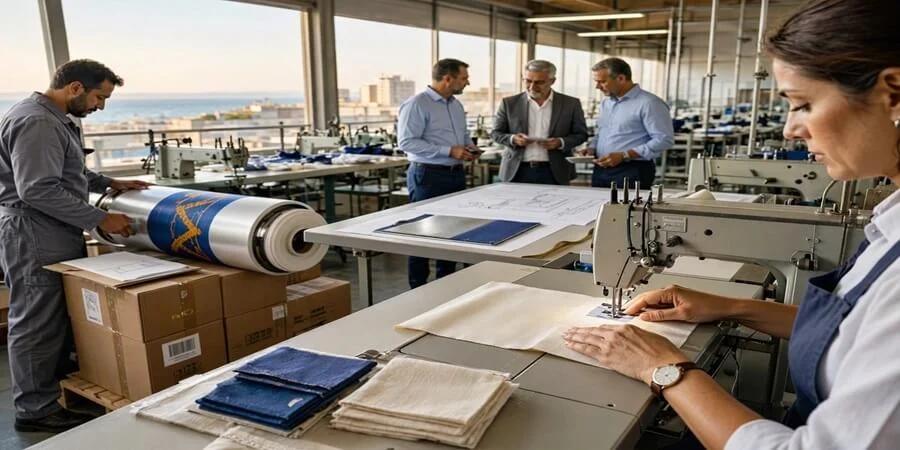
If you make clothing, fabrics or industrial components for the European market, Tunisia deserves a place on your shortlist. The country sits a short flight or ferry ride from Italy and France, has decades of manufacturing experience, and keeps finding new ways to move up the value chain. Here is where the real investment opportunities are in Tunisia’s textile and manufacturing sector, and how to approach them.
Why manufacturers look at Tunisia
Geography is the first argument. Tunisia’s economy is closely tied to Europe, with the European Union taking more than 70% of the country’s exports. Short shipping times mean faster restocking, smaller minimum orders and fewer surprises, which matters a lot for fashion brands working on tight seasonal calendars.
The second argument is experience. Tunisian factories have been producing for European brands for generations, so buyers find teams that already understand quality checks, compliance audits and delivery deadlines. That know-how is hard to build from scratch elsewhere.
The textile sector at a glance
According to the organizers of the ITF Intertex Tunisia 2026 trade fair, textiles and clothing represent roughly 18% of Tunisia’s industrial exports and provide close to 160,000 jobs. The sector’s federation has publicly set a goal of reaching 5 billion euros in exports by 2030, which tells you where the industry wants to go: more value per garment, not just more garments.
Where the opportunities are
Technical textiles. Workwear, protective clothing, medical textiles and industrial fabrics are a clear priority for Tunisian industry. Demand in Europe is steady, margins are better than in basic apparel, and there is room for investors with specialist machinery or certification expertise.
Denim and premium casualwear. Tunisia is already known for jeans and quality finishing. Washing, dyeing and finishing units that meet strict environmental standards are in demand, especially from brands that want cleaner supply chains.
Fabrics, trims and accessories. Much of the raw material still arrives from abroad. Local production of fabrics, labels, zippers, packaging and similar inputs can shorten lead times for factories already operating in the country.
Services around the factory. Logistics, machinery maintenance, quality control, design studios and training providers all serve a sector with thousands of companies. These are often easier entry points than building a factory.
Beyond textiles
Manufacturing in Tunisia is broader than clothing. Mechanical and electrical industries remain the main pillar of industrial exports, and national figures reported by the press showed industrial investment up 18% by the end of April 2026. Automotive components, wiring and electronics suppliers often share the same industrial zones, workforce pool and export routes as textile companies.
Practical tips before you invest
- Confirm which investment regime applies to you. Tunisian rules treat companies that export most of their output differently from those serving the local market.
- Check current incentives directly with the official investment promotion agencies, since terms change over time.
- Visit before you commit. Industrial zones differ in infrastructure, available labor and distance to ports.
- Start with a local partner or subcontracting arrangement, then scale once you know the market.
- Verify every supplier or partner independently. A visit and a few references save a lot of trouble.
Find Tunisian partners on Afrikta
The hardest part of entering a new market is finding reliable people to work with. On Afrikta you can browse businesses in Tunisia, compare companies by category and get in touch directly.
Run a textile, manufacturing or industrial services company in Tunisia? Add your business to Afrikta and let buyers and investors across Africa and beyond find you.